The complete guide to multi-state medical licensing
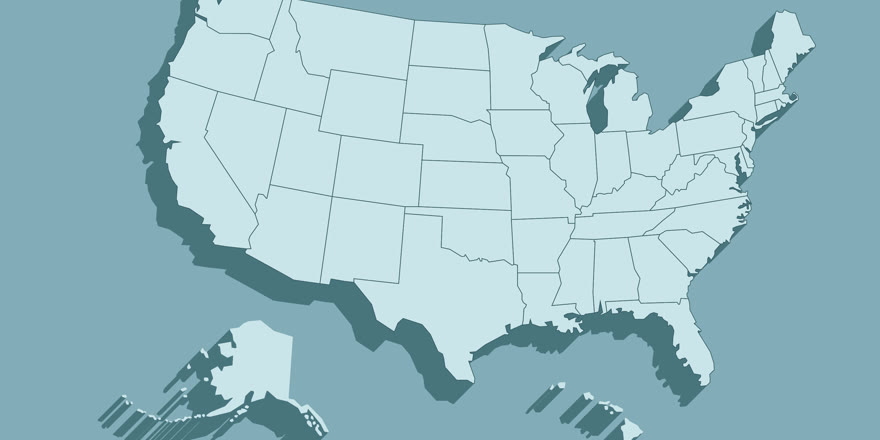
To treat patients in more than one state, a provider generally needs a medical license in each state where their patients are located — including for telehealth. Multi-state licensing is therefore a fan-out problem: every state adds its own board, application, fees, timeline, and renewal cycle. The Interstate Medical Licensure Compact (IMLC) streamlines getting licenses in many states, but it doesn't replace them — you still hold a separate license per state.
Quick answer: you need a license in each state where your patients are located. The Interstate Medical Licensure Compact speeds the application process across member states, but every state still issues — and you still renew — its own license.
The default: license in every state of practice
Licensure is state-based. The state where the patient is physically located at the time of care generally governs which license you need — which is why telehealth across state lines so often requires multiple licenses. Each state board sets its own application, documentation, fees, and processing time, so a provider expanding to five states is effectively running five applications in parallel.
The Interstate Medical Licensure Compact (IMLC)
The IMLC is an agreement among participating states that offers an expedited pathway for eligible physicians to obtain licenses in multiple member states. It speeds the process — but a few things are commonly misunderstood:
- It's faster, not fewer: you still receive (and must renew) a full license in each state.
- Eligibility rules apply: you designate a State of Principal License and must meet the Compact's criteria.
- Not every state participates, so some destinations still require the standard, state-by-state application.
- Fees still apply per state, on top of the Compact's processing.
Telehealth wrinkles
Telehealth expanded the need for multi-state licensing because care 'happens' where the patient is. Some states offer special telehealth registrations or exceptions, but these vary widely and change often. The safe default is to assume you need full licensure wherever your patients are unless a specific exception clearly applies.
Renewals: the part that bites at scale
Each state license renews on its own clock — often every 1–3 years, each with its own CME requirements and deadlines. DEA registrations and board certifications add still more dates. At ten providers across five states, that's dozens of independent renewal deadlines, and a single lapse can break credentialing and stop billing in that state.
The hidden cost of multi-state isn't getting the licenses — it's never letting one lapse. Every license, DEA, and board cert is a separate clock, and one missed renewal can knock a provider out of network in that state.
How to manage it at scale
- 01Centralize every credential and its renewal date in one system of record.
- 02Use the IMLC where eligible to compress application time across member states.
- 03Track each state's CME and renewal requirements separately — they don't align.
- 04Monitor expirations continuously and act weeks early, not at the deadline.
- 05Run new-state applications in parallel rather than sequentially.
How Rivon runs multi-state licensing
Rivon was built for exactly this fan-out. The platform keeps every state license, DEA, and board cert — across every provider — in one living roster, with always-on monitoring that flags each renewal weeks early so nothing lapses. Licensing pipelines run states in parallel, and Document AI keeps license data accurate without retyping. You see, at a glance, which provider is licensed where and what's coming due.
And when you'd rather not coordinate dozens of boards yourself, Rivon's white-glove team handles multi-state licensing end to end — applications, the Compact pathway where it fits, and every renewal — so expansion never stalls on a missed date.
Whether you run it on the Rivon platform or hand it to our white-glove team, the outcome is the same: every license current, every renewal ahead of schedule, every provider able to practice where you need them.