
The Future of Interstate Licensing: What the 2026 Expansion of Compacts Means for Healthcare Providers
Interstate licensure compacts are transforming how healthcare providers practice across state lines — and 2026 will be a critical year of expansion. From physicians to advanced practice nurses to physical therapists, more provider types are gaining access to multi-state licensing pathways that dramatically reduce administrative burden and accelerate onboarding.
Below is what medical groups, credentialing teams, and telehealth organizations need to know.

What Are Licensure Compacts?
Licensure compacts are formal agreements between states that allow healthcare providers to obtain licenses in multiple states more efficiently.
They streamline multistate practice by:
Reducing redundant paperwork
Offering expedited processing
Maintaining state authority while improving mobility
Supporting telehealth and cross-state patient care
Learn more:
https://telehealth.hhs.gov/licensure/licensure-compacts
https://compacts.csg.org/compact/interstate-medical-licensure-compact
Key Compacts to Watch in 2026
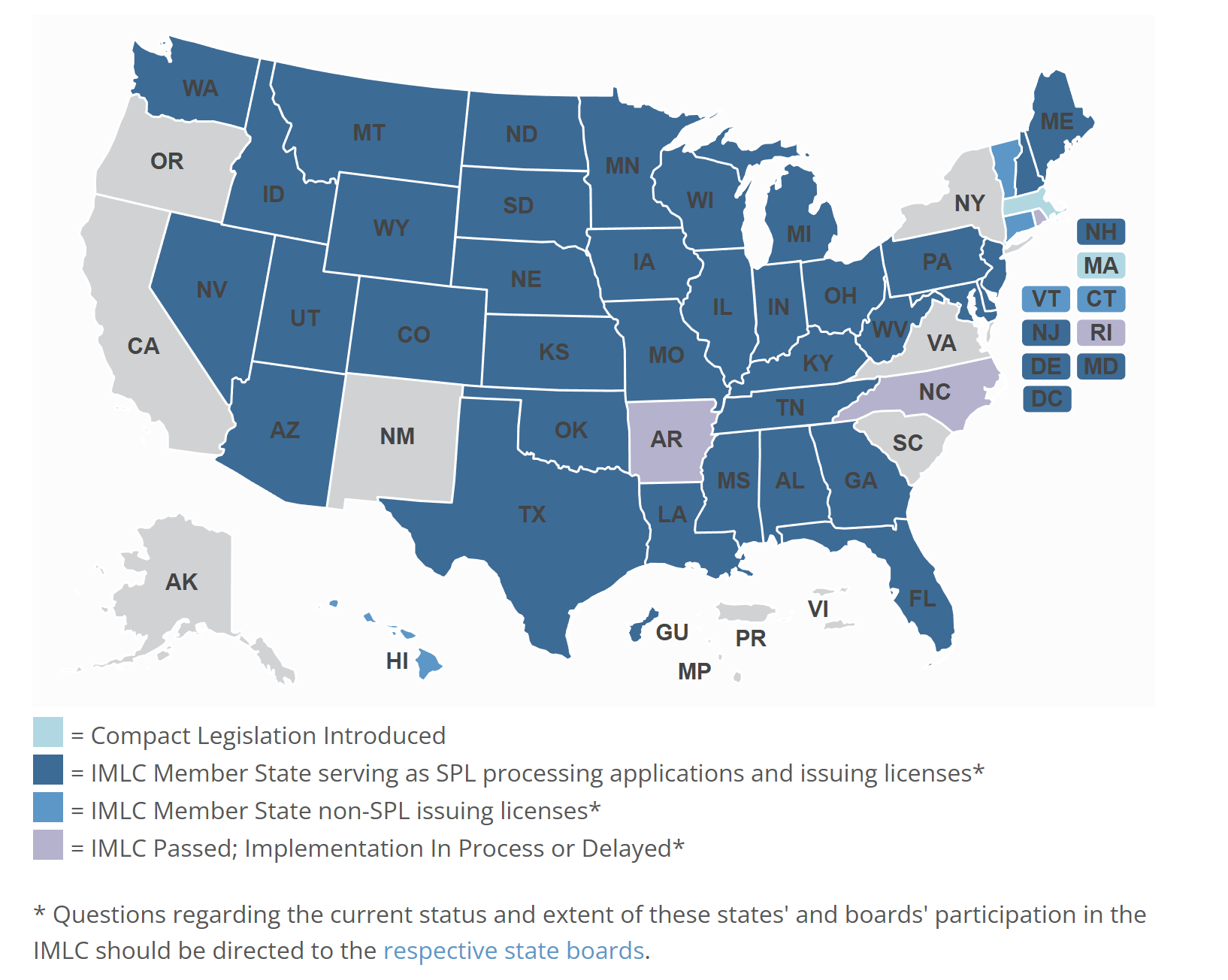
1. Interstate Medical Licensure Compact (IMLC) — Physicians
Covers MDs and DOs
As of late 2025: 42 states + DC + Guam are members
Allows a physician to apply once through their State of Principal License and request expedited licenses in other member states
Details: https://imlcc.com
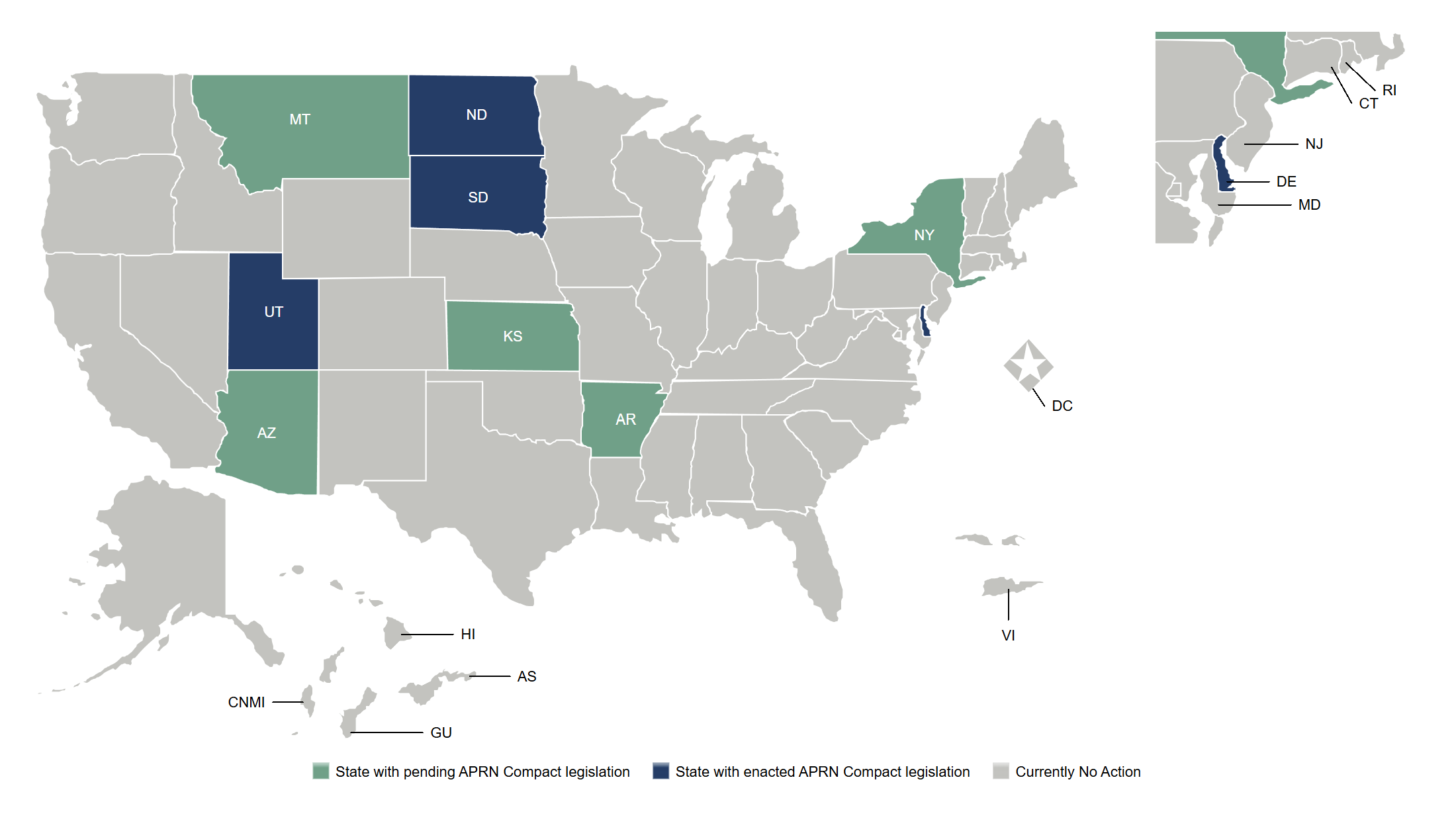
2. APRN Compact (Nurse Practitioners, CRNAs, CNMs, CNSs)
Allows one multistate license for APRNs
Currently enacted in only a handful of states (DE, UT, ND, SD, etc.) but expected to grow into 2026
Status map:
https://compacts.csg.org/compact/advanced-practice-registered-nurse-compact
3. Physical Therapy Compact (PT Compact)
Streamlines licensure for PTs and PTAs
Growing in membership as states modernize telehealth and mobility rules
Info: https://ptcompact.org

What About Physician Assistants? The PA Licensure Compact Is Emerging
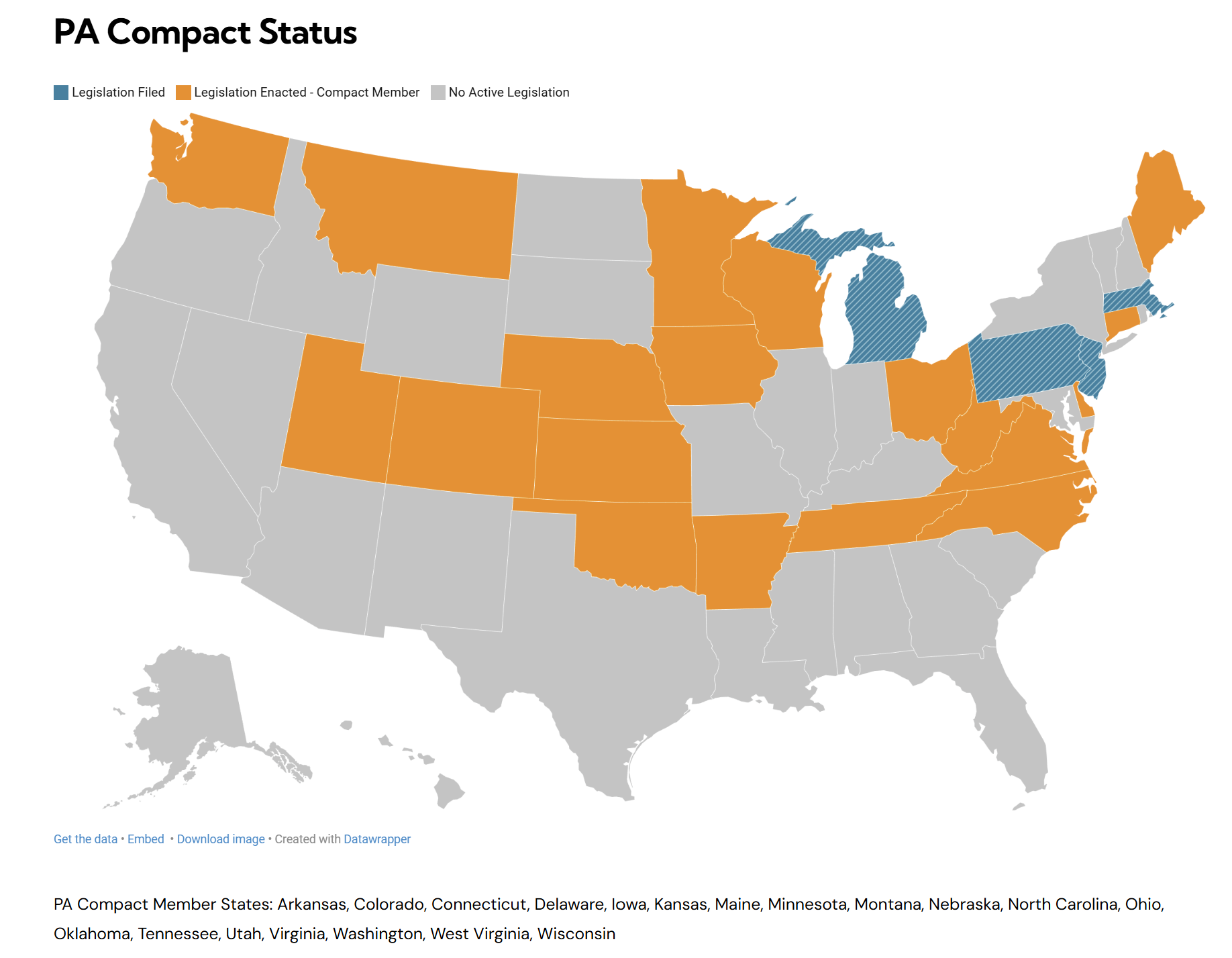
Many healthcare organizations are surprised to learn that physician assistants now have their own interstate licensure compact—the PA Licensure Compact. As of 2025, more than a dozen states have enacted compact legislation, meeting the activation threshold. However, the compact is not yet fully operational, meaning PAs must still obtain individual state licenses for now. Once implemented, the PA Compact will function similarly to the IMLC and APRN Compact: eligible PAs will be able to secure a compact privilege to practice across participating states without repeating the full state-by-state licensure process. This development will significantly streamline multistate practice, reduce administrative burden, and support telehealth expansion—but only after the compact’s centralized system and data-sharing infrastructure go live. For now, licensing teams should continue traditional workflows while preparing for a major shift in PA mobility in the coming years.
How Compacts Simplify Multistate Licensing
Traditional Licensing vs. Compact Licensing
Traditional Licensing:
Apply separately for each state
Different requirements for each board
Processing can take weeks to months
Creates delays for onboarding and payer enrollment
Compact Licensing:
One central application for many states
Faster processing (often 1–3 weeks)
Easier renewals
Better for telehealth and multistate staffing
Reduced administrative workload
IMLC details: https://imlcc.com/information-for-physicians
Why 2026 Is a Turning Point
Several trends are driving major changes:
✔ Rapid expansion of IMLC membership
Multiple states joined in 2024–2025, with more legislation pending for 2026.
✔ Increased demand for telehealth
Multistate licensing is essential as providers increasingly deliver virtual care across state lines.
✔ Workforce mobility pressure
Staffing shortages and flexible clinician schedules require faster deployment across states.
✔ Digital licensing systems
Boards are modernizing systems to support compact processing and electronic verification.
Limitations to Be Aware Of
Compacts are powerful, but not universal.
Not all states participate in every compact
Providers must still meet eligibility requirements (e.g., unrestricted license, clean record)
Compact participation does not equal a national license — each state still issues its own
Fees still apply for each state license obtained via compact
APRN Compact adoption remains slow compared to IMLC
More details:
https://imlcc.com
https://compacts.csg.org
What This Means for Medical Groups & Credentialing Teams
Benefits in 2026:
Faster onboarding of clinicians
Reduced administrative workload
Faster payer enrollment timelines
Improved telehealth scalability
Easier multistate expansion
Competitive advantage in provider recruitment
What Organizations Should Do Now:
Track compact legislation for each provider type
Identify which providers qualify for compact pathways
Build compact licensing into onboarding workflows
Educate clinicians on eligibility requirements
Partner with a credentialing service that understands interstate expansion
Helpful Links for Your Team
IMLC Official Site: https://imlcc.com
APRN Compact Info: https://compacts.csg.org/compact/advanced-practice-registered-nurse-compact
PT Compact: https://ptcompact.org
Telehealth Compact Overview (HHS): https://telehealth.hhs.gov/licensure/licensure-compacts
Conclusion
The expansion of interstate licensure compacts is reshaping how healthcare providers work across the United States. As we approach 2026, medical groups and credentialing organizations that embrace these changes will be able to onboard faster, scale more efficiently, and deliver care across more states than ever before.
Understanding compacts — and strategically using them — is now essential for modern healthcare operations.